Archive for the 'Candida & Fungus' Category07.31.2009
Still looking for a simple way to a self-diagnosis regarding yeast and candida health issues? Dr. Salvatore D’Onofrio’s official website, www.healthguardians.com, offers a basic Candida Questionnaire and an Expanded Questionnaire to help anyone facing possible overgrowth of candida cells to determine if their suspicions are accurate. Millions of Americans suffer from problems with candida, but overcoming these troubles can be simple with an improved diet and stress-free routine. Nationally certified as a Wellness and Nutritional Consultant, Dr. D’Onofrio is a leading figure in the Nutripathy world, publishing several books including Yeast Control in Seven Days. With a complete understanding of spiritual, physical and mental wellness, Dr. D’Onofrio helps patients find the pathway to a clean, comfortable and healthy lifestyle. With a variety of nutripathic programs, the Health Guardians site offers solutions to anyone struggling with low energy, bloating, mental fatigue, mood swings, stress, joint pain or muscle stiffness. While these problems may seem difficult to cure, a nutritional consultation and accompanying program can provide the essential tools toward a better well-being. Because some patients cannot travel all the way to California for in-person consultations, long distance and at-home phone consultations can provide easy and efficient assistance for all types of patients. Explore the site to become educated on the benefits of a nutrition program and the ways which your life can be impacted by understanding how to better manage your health. A California Hydrotherapy Colonics company, TransformYourHealth.net specializes in internal body cleansing, nutrition education and wellness promotion. As a Santa Monica Hydrotherapy Colonics specialist, Palos Verdes, including South Bay, Gardena, Hawthorne, Hermosa Beach, Lomita, Manhattan Beach Hydrotherapy Colonics specialist, many California residents rely on TransformYourHealth.net for hydrotherapy products, resources and information. For more information and to browse a selection of high-quality natural products, please visit TransformYourHealth.net. About Company A Santa Monica, California Hydrotherapy Colonics company, TransformYourHealth.net specializes in internal body cleansing, nutrition education and wellness promotion. As a Santa Monica Hydrotherapy Colonics specialist and Palos Verdes Hydrotherapy Colonics specialist, many California residents rely on TransformYourHealth.net for hydrotherapy products, resources and information. For more information and to browse a selection of high-quality natural products, please visit TransformYourHealth.net.
 read users comments (2) read users comments (2)
Understanding Candida Cells and Yeast-Related Body IssuesAuthor: Jessica07.27.2009
Are you among the 80 million Americans affected by yeast and fungal-related issues? If so, understanding yeast’s negative impact on your body is the first step toward a more healthy and comfortable existence. While women are known to encounter the overt symptom of a vaginal yeast infection, these problems absolutely affect both sexes. These yeast cells, known as Candida Albicans, can quickly multiply and spread throughout the entire body. From vaginal yeast infections to an overgrowth of yeast cells in the digestive tract, candida cells can hijack your body’s normal functioning process. This can cause food cravings, bloating, liver overload, gas, irritable bowl syndrome, headaches, short term memory loss, postnasal drip and on and on. Yeast issues are typically very treatable problems, and the solution begins with cleansing the intestinal tract of toxins. This can be anywhere from a one to four week program as recommended by your colon hydro therapist. After a proper cleanse, maintaining a healthy, low-sugar/low yeast diet while feeding your digestive tract with plenty of probiotics (good bacteria) should keep us in a healthy balance. Also, probiotic implants directly into ones colon after cleansing can achieve phenomenal results. If you are unsure of whether you could be facing a yeast overgrowth, the National Candida Center’s Candida Yeast Infection Self-Exam can help determine if yeast may be hurting your body. A California Hydrotherapy Colonics company, TransformYourHealth.net specializes in internal body cleansing, nutrition education and wellness promotion. As a Santa Monica Hydrotherapy Colonics specialist, Palos Verdes, including South Bay, Gardena, Hawthorne, Hermosa Beach, Lomita, Manhattan Beach Hydrotherapy Colonics specialist, many California residents rely on TransformYourHealth.net for hydrotherapy products, resources and information. For more information and to browse a selection of high-quality natural products, please visit TransformYourHealth.net. About Company A Santa Monica, California Hydrotherapy Colonics company, TransformYourHealth.net specializes in internal body cleansing, nutrition education and wellness promotion. As a Santa Monica Hydrotherapy Colonics specialist and Palos Verdes Hydrotherapy Colonics specialist, many California residents rely on TransformYourHealth.net for hydrotherapy products, resources and information. For more information and to browse a selection of high-quality natural products, please visit TransformYourHealth.net. Cancer As a Fungus Not Such a Radical IdeaAuthor: Jessica07.20.2009
Cancer is a fungus may not be as radical an idea as you’d think. Dr. Tullio Simoncini, an oncologist in Italy, has discovered what biopsy and treatment have not, that cancer tumors are actually a fungus in the body called, Candida albicans. This gentle man’s discovery and simple approach is standing the medical establishment on its head when it comes to how we view cancer and better yet…how to treat it. Dr. Simoncini claims that when he has examined cancer tumors of his patients they are white, which brought him to the conclusion and the title of his book Cancer Is Fungus. The gentle doctor from Italy says we should be treating cancer as we would any fungus, not by surgery, radiation or chemotherapy-all terribly invasive, sometime life-threatening treatments-but by a simple ‘wash’ with 200 grams of sodium bicarbonate and water. When one considers that our cells are made up of a cell wall and a nucleus and fungus cells are made up of a cell wall and nucleus, it stands to reason we cannot introduce something into the body that would damage our cells (which is what chemo does) but something that will not be harmful to us but harmful to the fungus. Simoncini’s benign water/backing soda solution has seen a regression in one day after treatment with no harmful side effects. He has seen success in the treatment of colon cancer, melanoma cancer and terminal carcinoma of the cervix. When one considers the alarming statistic that 75 % of physicians refuse chemotherapy themselves, Dr. Tullio Simoncini’s approach is not only important but timely. Read more about Dr. Simoncini’s book and approach at http://curenaturalicancro.com/. A California Hydrotherapy Colonics company, TransformYourHealth.net specializes in internal body cleansing, nutrition education and wellness promotion. As a Santa Monica Hydrotherapy Colonics specialist, Palos Verdes, including South Bay, Gardena, Hawthorne, Hermosa Beach, Lomita, Manhattan Beach Hydrotherapy Colonics specialist, many California residents rely on TransformYourHealth.net for hydrotherapy products, resources and information. For more information and to browse a selection of high-quality natural products, please visit TransformYourHealth.net. About Company A Santa Monica, California Hydrotherapy Colonics company, TransformYourHealth.net specializes in internal body cleansing, nutrition education and wellness promotion. As a Santa Monica Hydrotherapy Colonics specialist and Palos Verdes Hydrotherapy Colonics specialist, many California residents rely on TransformYourHealth.net for hydrotherapy products, resources and information. For more information and to browse a selection of high-quality natural products, please visit TransformYourHealth.net. Body Ecology Diet’s Answer to Mineral DeficiencyAuthor: Jessica06.13.2008
Why People – Especially Kids – Are Not Getting Enough Minerals (and What to Do About It)by Donna Gates for BodyEcology.com
Once upon a time, people grew and harvested fruits and vegetables that they used to make healthy, whole food meals. Those fruits and vegetables were full of vital nutrients from the land and nourished the bodies of those who ate them, helping them to grow healthy and strong. Today we’re told to eat plenty of fruits and vegetables as part of a healthy diet, but even if you are eating them, something is most likely missing. Our produce no longer has all the nutrients we need. In fact, the USDA has reported that there is a 25-80% decline in the mineral content of the foods we eat.1 Whether a result of over-farming, pesticides, genetically altered seeds, decreased soil quality, or fertilizers, one thing is for certain: Americans young and old are mineral deficient because our food supply no longer gives us the nutrients we need. Dangerous Mineral Deficiency Taking in significant amounts of minerals is an overlooked and underemphasized reason why so many of us are not really healthy today. It greatly contributes to early and needless aging. Active in every single function of your (and your child’s) body, minerals are absolutely essential to good health. Consider the Japanese, who many years ago consumed a diet very rich in minerals. Their diets consisted of sea vegetables at every meal. They enjoyed good health exemplified by their dark, shiny hair, few wrinkles, calm and focused demeanors, and long lives. Gradually, though, the influence of the West has taken over. Many modern Japanese have abandoned their traditional ways of eating in favor of processed foods, caffeine and sugar. These mineral–depleting foods cause gray hair, wrinkles and other signs of premature aging. The Japanese are now just as concerned as we are about their children’s health. We are all seeing a generation of young children and teens who are intellectually very bright, but are unable to sit still and focus. Read on and I’ll explain why. Tying the dots of research together will show you that mineral deficiencies play a major role in these changes and this has long been a factor in the declining health of adults and children the world over. The major reasons we are now lacking minerals are:
The Many Health Benefits of Minerals It is so important that it must be stated again: minerals are active in every single function of your body. Here are just a few of the almost endless examples of the health benefits of minerals:
When you are mineral deficient, your whole body suffers. But nowhere in your body suffers more from mineral deficiency than your adrenals. Your adrenals are walnut sized glands that sit on top of your kidneys. The workhorses of your body, healthy adrenals ensure that you have lots of energy, help you sleep soundly, and regulate your brain, heart, liver, digestive, endocrine, and nervous systems. We age because our hormone levels decline each decade, and minerals are a vital nutrient for the organs in our body that produce our hormones. Your adrenals are also an integral part of your body’s response to stress. To be healthy our adrenals need feeding. And what they like to eat are minerals, B Vitamins and plenty of Vitamin C. Unfortunately, one of the major ways we “stress out” our adrenals is by not feeding them with the minerals they need to function. When our adrenals are mineral deficient, we may suffer from insomnia, have an acidic, achy stomach and have trouble digesting food. Our hormones will be out of balance, we feel sluggish and tired, gain weight, feel depressed and have difficulty concentrating. So feeding your adrenals with minerals is important for everyone, especially children and teens who are not only growing but who will become the future parents of the world. Create healthy children and teens, help them create a healthy new generation of babies someday and we can turn around the health crisis on the planet. Minerals are so important that it’s critical to nourish your own adrenals even before you have children AND extra amounts of minerals should be taken by a mother-to-be when she is creating a new life inside her womb! Research has shown that when a pregnant woman experiences stress during her pregnancy her fetus experiences stress too. Stress has a negative effect on the mother’s adrenals, but it also affects her baby’s newly-forming adrenal cells. One research study shows that when babies experience stress in the womb the cells of their adrenals are expanded and become weak. The study showed that these children were highly intelligent but could not handle stressful situations. They had trouble focusing and sitting calmly in school. They had trouble going to sleep at night. (Sound familiar?) This certainly helps explain behavioral and learning problems after birth. Research also indicates that children whose mothers experienced stress during pregnancy may be at greater risk for mental illness later in life.2 (This may explain the climbing rate of teen depression today and depression among those of African American decent.) Clearly our current epidemics of mental health problems and developmental disorders like autism and ADD can be traced back to poor nutrition, environmental toxins and stressful lifestyles. Fortunately, Body Ecology has a number of wonderful solutions to offer the world at this time. From conception, our children are not receiving the valuable minerals they need to grow healthy and strong. For those of us who are well past childhood, the fatigue, stress, chronic diseases, and deterioration of our bodies indicate that mineral deficiency is taking its toll. But if we can’t depend on our food supply to nourish us with the minerals we need, what are we to do? Simple Antidote to Mineral Deficiency I created the Body Ecology system of health and healing as a mineral-rich antidote to our modern world. By following the Body Ecology diet, you can replenish your body with the minerals it needs, not only to function properly, but also to attain vibrant health! Whether you are a parent yet or not, a diet rich in minerals will prepare you to pass on a legacy of health to our most precious resources: the next generation of children. Here are 6 easy tips for you to reclaim your health and get missing minerals for you and your kids:
Essential Minerals As our modern world puts more stress on our bodies, our minds and our environment, it becomes even more important to take charge of our health and the health of our kids. Minerals are essential to your well-being, but the Standard American Diet does not provide you with all the nutrients you and your children need. By following the Body Ecology system of health and healing you can replenish your body’s storehouse of minerals and improve your health, as well as the health of generations to come. Sources: 1 Jack, Alex, “Fruit Basket Upset: The Disappearing Nutrients in America’s Orchards,” CommunicationAgents.com. http://www.communicationagents.com/emma_holister/2004/12/12/the_disappearing_nutrients_in_americas.htm 2 Dingfelder, Sadie, “Programmed for psychopathology?” APA.org. http://www.apa.org/monitor/feb04/programmed.html 3 Caffeine, Nutrition.com.sg. http://www.nutrition.com.sg/atd/atdcaffeine.asp 4 Children Under Stress Develop More Fevers, MedicalNewsToday.com, 9 Mar 2007. http://www.medicalnewstoday.com/articles/64586.php Body Ecology’s Candida QuizAuthor: Jessica06.01.2008
Candida Questionnaire and Score Sheet*This questionnaire lists factors in your medical history that promote the growth of the common yeast, Candida Albicans (Section A), and symptoms commonly found in individuals with yeast-connected illness (Sections B and C). *Filling out and scoring this questionnaire should help you and your physician evaluate how Candida Albicans may be contributing to your health problems. Yet it will not provide an automatic yes or no answer. A comprehensive history and physical examination are important. In addition, laboratory studies, x-rays, and other types of tests may also be appropriate. For each yes answer in Section A, circle the Point Score. Total your score, and record it at the end of the section. Then move on to Sections B and C, and score as directed.
Section A:History Point Score 1. Have you taken tetracyclines (Sumycin®, Panmycin®, Vibramycin®,Minocin®, etc.) or other antibiotics for acne for 1 month (or longer)? Point score-50 2. Have you, at any time in your life, taken other "broad spectrum" antibiotics for respiratory, urinary or other infections for 2 months or longer, or for shorter periods 4 or more times in a 1-year span? Point score-50 3. Have you taken a broad spectrum antibiotic drug – even for one period? Point score-6 4. Have you, at any time in your life, been bothered by persistent prostatitis, vaginitis, or other problems affecting your reproductive organs? Point score-25 5. Have you been pregnant 2 or more times? Point score-5 Pregnant 1 time? Point score-3 6. Have you taken birth control pills for more than 2 years? Point score-15 Taken birth control pills 6 months to 2 years? Point score-8 7. Have you taken prednisone, Decadron®, or other cortisone-type drugs by mouth or inhalation** for more than 2 weeks? Point score-15 Taken these drugs 2 weeks or less? Point score-6 8. Does exposure to perfumes, insecticides, fabric shop odors, or other chemicals provoke moderate to severe symptoms? Point score-20 Does exposure produce mild symptoms? Point score-5 9. Are your symptoms worse on damp, muggy days or in moldy places? Point score-20 10.Have you had athlete’s foot, ringworm, "jock itch" or other chronic fungus infections of the skin or nails that have been severe or persistent? Point score-20 Mild or moderate? Point score-10 11. Do you crave sugar? Point score-10 12. Do you crave breads? Point score-10 13. Do you crave alcoholic beverages? Point score-10 14. Does tobacco smoke really bother you? Point score-10 Total Score, Section A _______**The use of nasal or bronchial sprays containing cortisone and/or other steroids promotes overgrowth in the respiratory tract. Section B:Major Symptoms For each symptom that is present, enter the appropriate number in the Point Score column: If a symptom is occasional or mild, score 3 points. If a symptom is frequent and/or moderately severe, score 6 points. If a symptom is severe and/or disabling, score 9 points. Total the score for this section, and record it at the end of this section. Point Score 1. Fatigue or lethargy _______ 2. Feeling of being "drained" _______ 3. Poor memory _______ 4. Feeling "spacey" or "unreal" _______ 5. Inability to make decisions _______ 6. Numbness, burning or tingling _______ 7. Insomnia _______ 8. Muscle aches _______ 9. Muscle weakness or paralysis _______ 10. Pain and/or swelling in joints _______ 11. Abdominal pain _______ 12. Constipation _______ 13. Diarrhea _______ 14. Bloating, belching or intestinal gas _______ 15. Troublesome vaginal burning, itching or discharge _______ 16. Prostatitis _______ 17. Impotence _______ 18. Loss of sexual desire or feeling _______ 19. Endometriosis or infertility _______ 20. Cramps and/or other menstrual irregularities _______ 21. Premenstrual tension _______ 22. Attacks of anxiety or crying _______ 23. Cold hands or feet and/or chilliness _______ 24. Shaking or irritable when hungry _______ Total Score, Section B _______ Section C:Other Symptoms* For each symptom that is present, enter the appropriate number in the Point Score column: If a symptom is occasional or mild, score 3 points. If a symptom is frequent and/or moderately severe, score 6 points. If a symptom is severe and/or persistent, score 9 points. Total the score for this section and record it in the box at the end of this section. Point score 1. Drowsiness _______ 2. Irritability or jitteryness _______ 3. Incoordination _______ 4. Inability to concentrate _______ 5. Frequent mood swings _______ 6. Headaches _______ 7. Dizziness/loss of balance _______ 8.Pressure above ears, feeling of head swelling _______ 9. Tendency to bruise easily _______ 10. Chronic rashes or itching _______ 11. Psoriasis or recurrent hives _______ 12. Indigestion or heartburn _______ 13. Food sensitivity or intolerance _______ 14. Mucus in stools _______ 15. Rectal itching _______ 16. Dry mouth or throat _______ 17. Rash or blisters in mouth _______ 18. Bad breath _______ 19. Foot, hair or body odor not relieved by washing _______ 20. Nasal congestion or post nasal drip _______ 21. Nasal itching _______ 22. Sore throat _______ 23. Laryngitis, loss of voice _______ 24. Cough or recurrent bronchitis _______ 25. Pain or tightness in chest _______ 26. Wheezing or shortness of breath _______ 27. Urinary frequency, urgency or incontinence _______ 28. Burning on urination _______ 29. Spots in front of eyes or erratic vision _______ 30. Burning or tearing of eyes _______ 31. Recurrent infections or fluid in ears _______ 32.Ear pain or deafness _______ *While the symptoms in this section occur commonly in patients with yeast-connected illness, they also occur commonly in patients who do not have candida. Total Score, Section C _______ Total Score, Section B _______ Total Score, Section A _______ Grand Total Score (add totals from Sections A, B and C) _______ The Grand Total Score will help you and your physician decide if your health problems are yeast-connected. Scores for women will run higher, as 7 items in this questionnaire apply exclusively to women, while only 2 apply exclusively to men. Yeast-connected health problems are almost certainly present in women with scores over 180, and in men with scores over 140. Yeast-connected health problems are probably present in women with scores over 120, and in men with scores over 90. Yeast-connected health problems are possibly present in women with scores over 60, and in men with scores over 40. With scores less than 60 for women and 40 for men, yeast are less apt to cause health problems. This questionnaire is available in quantity from Professional Books, Inc., P.O. Box 3246, Jackson, TN 38302. Prices upon request. Copyright 1984. The Yeast Connection by William G. Crook, M.D. Reprinted with permission. Back to homepage Back to Body Ecology Diet book |

 You care about your kids and give them fruits and vegetables, but did you know many of today’s foods are mineral deficient? Here’s how to boost your health and that of future generations with foods rich in precious vitamins and minerals.
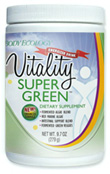 Need more minerals? Then try this energy-boosting whole food. Vitality SuperGreen is a delicious way to boost your mineral intake while you get powerful probiotics and healthy fiber to restore the health of your digestive system at the same time. Try